Palatine Swim Camp Series (Ages 9 to 11), Palatine, IL
Buehler YMCA
1400 W. Northwest Hwy.,
Palatine,
IL 60067
Introduction
Fitter & Faster is producing a series of swim camps for competitive swimmers ages 9 to 11 at Buehler YMCA in Palatine, Illinois, in 2026. Please click here for the registration page for swimmers ages 12 & Over.
2026 Palatine, IL Swim Camp Series
-> Comprehensive Freestyle Racing Swim Camp (April 18-19)
-> Comprehensive Butterfly Racing Swim Camp (September 19-20)
-> The Essentials of Sprinting Swim Camp (November 28-29)
🔽 Scroll down for details on the curriculum!
✔️ Each session has limited availability to ensure a focused, high-quality learning environment.
💡 Save when you purchase the “Entire Camp Bundle” for your swimmer.
💲 Registration prices increase as the camps get closer. Purchase early before sessions sell out.
🕒 Session Start Times for All Camps
Check-in 9am, Camp 9:15-11:45am
Suggested Participants
Our top priority is to provide a world-class learning experience for all participants at all of our camps. This camp has sessions for swimmers ages 9 to 11. Participants will range from one-year of competitive swimming experience to AAAA times and faster. If you are the parent of a swimmer under the age of 9 and would like your swimmer to be considered for the younger sessions of this camp, please complete this questionnaire.
Select a curriculum below


COMPREHENSIVE FREESTYLE RACING SWIM CAMP: April 18 & April 19, 2026
Freestyle is the first stroke we learn. It’s the stroke we swim the most at practice. There are more freestyle races and relays at meets... and it is the fastest stroke to move through the water. As with any other stroke, the more efficient and powerful your technique - the more success you will experience with your practices and freestyle races as your career progresses. Over two days, your swimmer, no matter their level, will improve their freestyle technique, racing and training skills!
- FREESTYLE TECHNIQUE: Whether your swimmer is just learning freestyle or already competing at the high school level, it’s never too late to build strong habits. In this session, your swimmer will work on bodyline, rotation, breathing, kick, and pull—five key elements that contribute to an efficient, powerful freestyle.
- Check-in: 9 AM, Camp: 9:15 - 11:45 AM
- Bodyline: A streamlined body position is the foundation of a fast freestyle. Even small adjustments to head, neck, or back alignment can make a significant difference. As swimmers grow and mature, they often develop habits that disrupt bodyline. Your swimmer will learn how to maintain proper posture and engage the core to stay long and hydrodynamic through every stroke.
- Breathing: Efficient breathing is a challenge but critical to maintaining bodyline. Lifting the head too high causes hips to drop and drag to increase. Clinicians will work with participants to keep the head low and horizontal during the breath, using controlled rotation of the neck and body for a smooth, quick inhale.
- Rotation: Freestyle is most powerful when the swimmer rotates around their spine with each stroke. Rotation allows swimmers to use their back and core muscles during the pull, making the stroke stronger and more sustainable. Your swimmer will learn how to glide on one side and initiate rotation as the pulling hand begins its movement.
- Kicking: The kick is the motor of freestyle. Swimmers must drive from the hips and knees with good timing and control. This session will help your swimmer understand how to adjust kick tempo and power to provide speed when they want or need it.
- Pull: Clinicians will teach participants to establish a “high elbow catch,” also known as early vertical forearm, to apply pressure to the water immediately. Swimmers will then work on pushing water directly back towards their feet with sustained leverage, engaging large muscle groups for a powerful finish to each stroke.
- FREESTYLE RACING AND TRAINING SKILLS: The technique for swimming a fast freestyle race changes depending on the distance. Learning to prioritize tempo and length of stroke, while maintaining efficiency has a huge impact on maximizing speed for sprints or increasing endurance for distance races.
- Check-in: 9 AM, Camp: 9:15 - 11:45 AM
- Stroke Length: A long stroke will enable your swimmer to “catch” and hold onto more water to propel them as they swim. Whereas, a short stroke is inefficient and not sustainable for very long. The clinicians will work with participants on this important skill for fast swimming.
- Tempo: Tempo is the rate at which a swimmer is moving their arms and legs. When sprinting short races many swimmers often tend to take too many strokes (“spin their wheels”) and not “hold onto the water”. At this camp we will explore different tempos that suit your swimmer for different distances.
- Pacing/Control: A swimmer’s tempo will change depending on the race that they are swimming. It may also change at different points during the same race! Your elite clinician will teach participants how to manipulate their tempo, speed and energy at different points in a race. This is called Pacing or “Control”.
- Breathing Pattern: Establishing a breathing pattern will help the swimmer stay focused and relaxed during their swim. It will also help them finish the race with enough oxygen to close the race at full speed.
- Speed Set: At the end of this session your swimmer will do a short and fast swim set to practice everything they have learned over the past two days.
COMPREHENSIVE BUTTERFLY RACING SWIM CAMP: September 19 & September 20, 2026
At the highest level of swimming, butterfly is the second fastest stroke and beautiful to watch because of its rhythmic and powerful strokes. There are some complexities to establishing a smooth, rhythmic fly, but with practice and attention to detail your swimmer can master the stroke and begin swimming it for longer distances and at very fast speeds! No matter your swimmer’s level, this 2-day camp will strengthen their butterfly technique, racing and training skills that will lead to faster and more efficient butterfly races!
- BUTTERFLY TECHNIQUE: We want your swimmer to establish a rhythmic butterfly. Today we will practice various drills and skills that will enable your swimmer to have flowing hips and a long, more powerful butterfly stroke.
- Check-in: 9 AM, Camp: 9:15 - 11:45 AM
- Bodyline: A butterfly race is going to be fastest with a proper bodyline. Even the slightest adjustment of the chin, neck, and/or back can make a huge difference. As swimmers mature in the sport and grow physically, their body position shifts and bad habits can emerge. Participants will learn and practice proper posture and engagement of their core to have a strong foundation for better technique - creating a full-body connection for more hydrodynamic and efficient butterfly strokes.
- Kick: Each butterfly stroke has two kicks to propel the swimmer towards the other end of the pool! If the kicks are properly timed and equally strong, they can positively impact your swimmer’s efficiency and stroke timing! Your swimmer will work on how and when to kick in butterfly for maximum speed.
- Pull: Long and smooth strokes allow swimmers to have a more efficient and fluid butterfly. The pull in butterfly keeps a swimmer accelerating forward. Your clinicians will work with participants to establish an early vertical forearm, “the catch”, enabling the swimmers to put immediate pressure back on the water. Properly completing the stroke keeps the swimmer moving forward efficiently and fast.
- Breath: The timing of the breath in butterfly has a direct relationship on a swimmer’s body position, pull, kick and TIMES! At this camp, we will work with participants on breathing with their chin low to the water... and WHEN to breathe in their stroke cycle so that they develop the most efficient stroke possible!
- BUTTERFLY RACING & TRAINING SKILLS: On the first day of this camp swimmers worked on skills to implement a solid, efficient butterfly stroke. On Day 2 we will work on racing skills and apply speed to their butterfly. Your swimmer's elite clinicians will work with participants on maintaining their technique by developing proper distance per stroke, appropriate race tempo, and training for a faster and stronger butterfly.
- Check-in: 9 AM, Camp: 9:15 - 11:45 AM
- Stroke Length: Lengthening your swimmer’s butterfly stroke will enable them to “catch” and hold onto more water to propel them as they swim. In butterfly, it is particularly important to establish a “rhythmic flow”. We will teach participants how to stay long and avoid a short butterfly stroke that is inefficient and not sustainable for very long. The clinicians will work with participants on this important skill for swimming fast butterfly.
- Tempo: Tempo in butterfly is the rate at which a swimmer is moving their arms and hips. When swimming butterfly races many athletes tend to take too many short strokes (“spin their wheels”) and not “hold onto the water”. At this camp we will explore different tempos that are sustainable for any distance your swimmer is racing.
- Powerful Underwater Dolphin Kicking: There are a few different techniques that swimmers use when underwater dolphin kicking. The common theme of these techniques is that the best swimmers kick up and down with equal power. We will show your swimmer the different techniques that elite swimmers use and teach them how to implement.
- Speed Set: At the end of this session your swimmer will do a short and fast swim set to practice everything they have learned over the past two days.
THE ESSENTIALS OF SPRINTING: November 28 & November 29, 2026
Swimming fast requires good technique, efficiency, power, and a hard working athlete. Participants in this swim camp will advance their skills that apply to fast swimming in every stroke. Now is the time for swimmers to establish and cultivate habits to swim their shorter races as fast as possible with good technique that will position them for success as they mature.
- ESTABLISHING SPEED: At this session your swimmer will practice the essential components to high performance sprinting.
- Check-in: 9 AM, Camp: 9:15 - 11:45 AM
- Body Position: A competitive swimmer’s body position is the key to fast swimming. Most swimmers are NOT hydrodynamic in the water - and that has a big effect on how fast they “allow” themselves to swim - especially as they get older. Let’s find the right body position for your swimmer.
- Stroke Length: Lengthening their stroke will enable your swimmer to “catch” and hold onto more water to propel them as they swim. Whereas a short stroke is inefficient and not sustainable for very long. The clinicians will work with participants on this important skill for fast swimming.
- Tempo: When sprinting short races young swimmers often tend to take too many strokes (“spin their wheels”) and not “hold onto the water”. At this camp we will find the appropriate tempo to maximize their own personal speed.
- RACING SKILLS: On Day 2, your swimmer will apply the skills that we practiced on the first day of this camp to important segments of every sprint race, including the moment your swimmer pushes off the wall; breakouts; finishes and all out sprinting!
- Check-in: 9 AM, Camp: 9:15 - 11:45 AM
- Breakouts: Many swimmers add movement within their breakout that creates drag and destroys all of the power created during their underwaters. Participants will work on timing their breakouts to accelerate to explode into each lap.
- Sprinting: On Day 1 your swimmer worked on body position, tempo and length of stroke. Today we are going to apply those skills to swimming “all out” on top of the water with efficiency and power.
- Walls, Walls, Walls!: Approaching the wall at top speed in preparation for the fastest turn is vital. Swimmers will work on techniques to get in and out of every wall faster!
- Finishes: Dropping time and even winning or moving up a few spots in the results can all come down to the last stroke! A well-timed finish at full speed, with full-arm extension and head down can make a difference of up to a full second in a race! Your swimmer is going to learn how to take advantage of the finish to drop time!
- Sprinting Application: Swimmers at this session will work on applying their newly developed skills during racing scenarios. As with all the other segments of this camp, the clinicians will provide feedback for your swimmer to take home and apply at upcoming practices and meets.
ASK QUESTIONS
Swimmers and parents are invited to ask the clinicians questions during a Q&A session. Gain insight into their training regimen, diet and nutrition, and recovery tactics.
WATCH THE CLINICIANS
Observe clinicians swim at full speed and demonstrate a progression of perfectly executed drills to achieve powerful, efficient and fast swimming.
PUT YOUR SKILLS TO THE TEST
Throughout the camp, swimmers will practice what they've learned with some of the world's most elite Swimmer Clinicians and coaches!
Take a photo, get autographs, and chat with your clinicians!
Elite Clinician
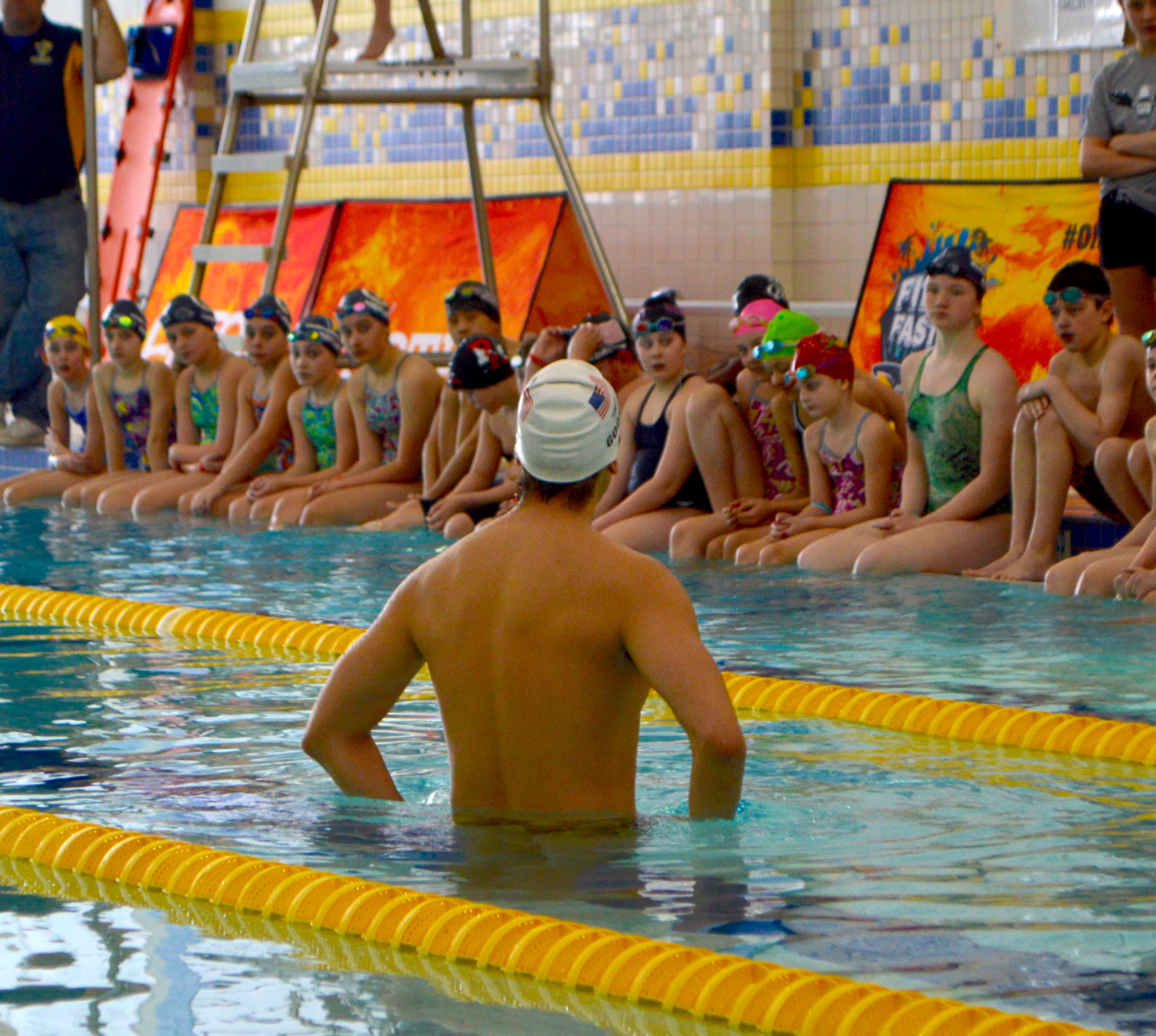
Fitter and Faster clinicians are Olympians and National Team members who have achieved at the highest level of the sport of swimming... and who have the unique skill to teach what they know from a technical perspective to swimmers of all ages and abilities.
Inquisitive, Educated Swimmers are Faster Swimmers! Sign up today!