
Competitive Enrichment Breaststroke & Butterfly Swim Camp (Ages 7 to 9), Irving, TX
Life Time - Las Calinos
7320 State Hwy 161,
Irving,
TX 75063
Introduction
Fitter & Faster is producing a 2-day Competitive Enrichment Swim Camp for swimmers ages 7 to 9 at Life Time in Irving, TX, on March 28-29, 2026! Our Competitive Enrichment Camps are engaging and transformative, designed to help young swimmers build foundational competitive skills, boost confidence, and develop a lifelong love for swimming. Please click here for the registration page for swimmers ages 10 to 12.
Competitive Enrichment Swim Camp (Ages 7 to 9)
Day 1 (Saturday, March 28): Butterfly Technique
Day 2 (Sunday, March 29): Breaststroke Technique
Scroll down for details on the curriculum.
✔️ Each session has limited availability to provide a focused, high-quality learning environment.
💡 Save when you purchase the “Entire Camp Bundle” for your swimmer.
💲 Registration prices increase as the camps get closer. Purchase early before sessions sell out.
Session Start Times for This Camp
Days 1 & 2: Check-in 8:45am, Camp 9-11:30am
Suggested Participants
Our top priority is to provide a world-class learning experience for all participants at all of our camps. This camp has sessions for swimmers ages 7 to 9. Please click here for the registration page for swimmers ages 10 to 12. Participants will range from one-year of competitive swimming experience to AAAA times and faster. If you are the parent of a swimmer under the age of 7 and would like for your swimmer to be considered for the younger sessions of this camp, please complete this questionnaire.
Curriculum
This exciting and engaging camp is designed to help young swimmers develop foundational competitive skills while having fun in a supportive environment. Through a mix of expert instruction and hands-on practice, participants will refine their technique, build confidence, and improve overall performance. Whether your swimmer is new to competition or eager to strengthen their skills, this camp provides the perfect opportunity to grow, learn, and thrive in the sport.
- Session 1: BUTTERFLY TECHNIQUE (Comptetitve Enrichment): Butterfly can be the most challenging stroke for younger swimmers due to its upper body demands and the difficulty in breaking the stroke into manageable drills. Teaching proper technique early, when strength is still developing, allows swimmers to build efficiency and confidence without relying on brute force. With instruction from our elite clinicians, your swimmer will learn a smooth, relaxed, and efficient Butterfly stroke that will serve them throughout their swimming career.
- BODY POSITION: Maintaining a streamlined body position is key in butterfly. Swimmers must keep their head low, chest pressing forward and down, and hips high to reduce drag. The three focus points below help young swimmers keep their bodies up on top of the water making it easier to maintain the proper rhythm.
- BODY UNDULATION: Butterfly relies on coordinated undulation (up and down movement) of the hips, shoulders and feet, which drives the arms through the water and helps move the head into position for breathing. Young swimmers often disrupt their timing when attempting to do two kicks during their stroke. While we want to add a second kick, establishing a single undulation for each stroke cycle is more important and should be tackled first.
- EARLY BREATH: Proper breath timing is crucial for maintaining an efficient body position in the water. Young swimmers often begin their breath too late, resulting in most of the breath occurring while their arms are out of the water during the recovery. With their head lifted and no arm support, their body tends to sink. To avoid this, the breath should begin as the swimmer initiates their pull, and by the time their arms exit the water, the head should already be moving back down. This timing allows the pull to support the body during the breath, keeping the hips high and reducing drag.
- ARM MOMENTUM: Butterfly can be a demanding stroke, but it offers an opportunity to pause and glide with the arms extended in front and the hips pressing upward. This brief pause helps swimmers move quickly through the back end of their stroke, generating momentum for the recovery while minimizing the time their head remains lifted out of the water. Our clinicians will work with your swimmer to eliminate any unnecessary pauses with their hands at their sides, promoting greater fluidity and consistent momentum throughout their stroke.
- Session 2: BREASTSTROKE TECHNIQUE (Competitive Enrichment): Of all the strokes, competitive breaststroke differs the most from the foundational form taught to young swimmers. This makes it one of the most challenging techniques to master. Our elite clinicians are here to help your swimmer develop race-ready breaststroke skills!
- GLIDING: Competitive breaststrokers glide with their hands extended in front, reaching toward the far wall. They hold this extended position until and for several moments after the kick is completed. Maintaining a long, almost streamlined bodyline during the glide is key to maximizing efficiency and speed.
- HIGH HIPS: A fast breaststroke requires swimmers to keep their hips high in the water at all times. This involves minimizing the time their head stays out of the water. Swimmers will learn to initiate their breath early in the pull and avoid pausing with their hands near their chest—a critical step for maintaining momentum.
- KICK: The kick is the powerhouse of breaststroke. Swimmers will work on lifting their heels (instead of pulling their knees forward) and snapping their feet quickly around and back to generate strong propulsion. Emphasis will be placed on maintaining the kick within the same horizontal plane and rotating the ankles throughout the motion to develop a powerful and legal kick. Our clinicians will guide participants in refining and strengthening their kick to achieve maximum forward momentum.
- PULL: The key to breaststroke is generating propulsion with the pull while minimizing resistance—and quickly returning to a straight bodyline for a high-speed glide. Many young swimmers have too big of an armstroke which impacts their timing and can even lead to disqualification. Swimmers in this clinic will learn to establish a proper "catch," keeping their hands and elbows high in the water and in front of their shoulders throughout the pull. These techniques will help them maintain forward momentum and achieve their fastest breaststroke.
ASK QUESTIONS
Swimmers and parents are invited to ask the clinicians questions during a Q&A session. Gain insight into their training regimen, diet and nutrition, and recovery tactics.
WATCH THE CLINICIANS
Observe clinicians swim at full speed and demonstrate a progression of perfectly executed drills to achieve powerful, efficient and fast swimming.
PUT YOUR SKILLS TO THE TEST
Throughout the camp, swimmers will practice what they've learned with some of the world's most elite Swimmer Clinicians and coaches!
Take a photo, get autographs, and chat with your clinicians!
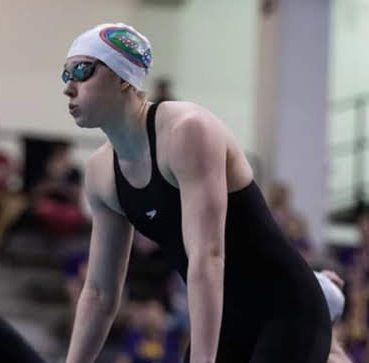
Gabrielle Hillis
Gabby Hillis combines her love for swimming and passion for working with young athletes in a career as a swim coach. She strives to help swimmers learn, grow, share, improve and enjoy what they are doing. She says, "Any positive impact I can make towards a swimmer’s success makes it all worth it!”.
Inquisitive, Educated Swimmers are Faster Swimmers! Sign up today!